Care Intelligence Digest
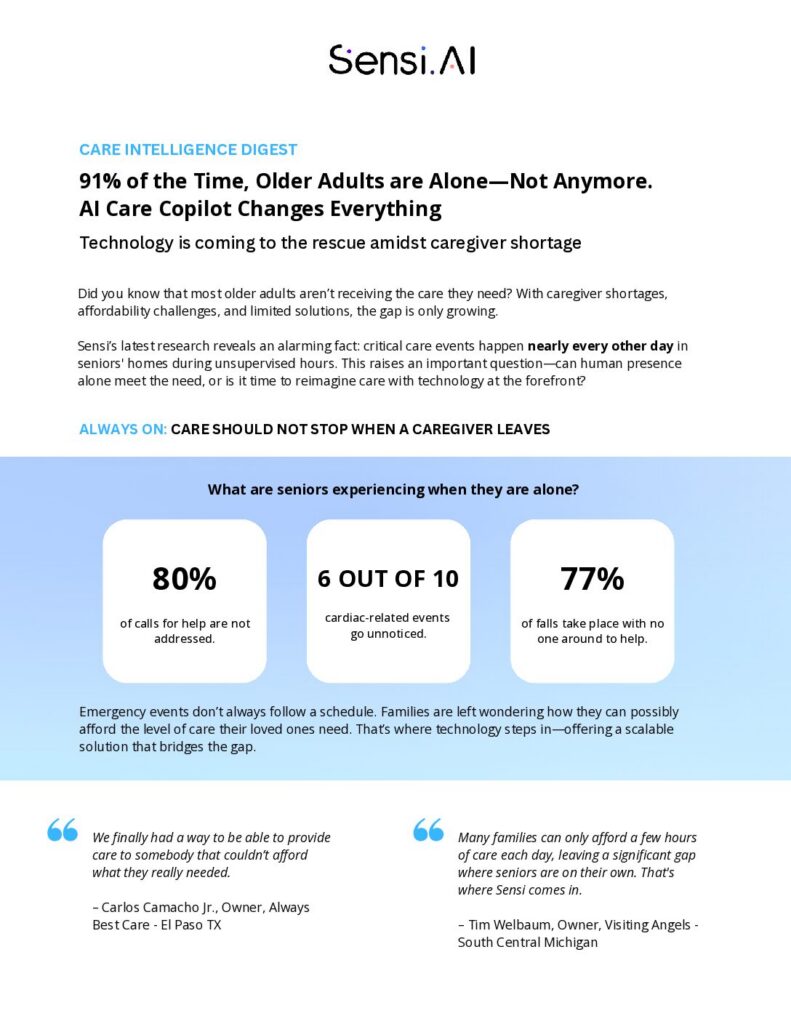
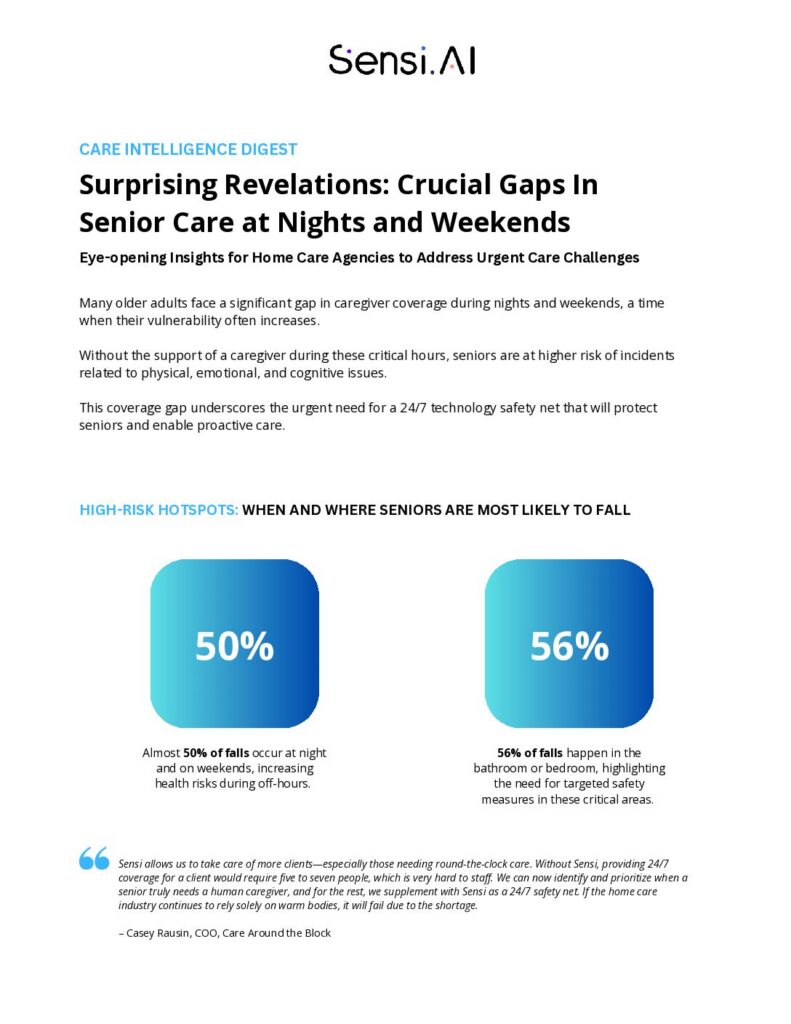
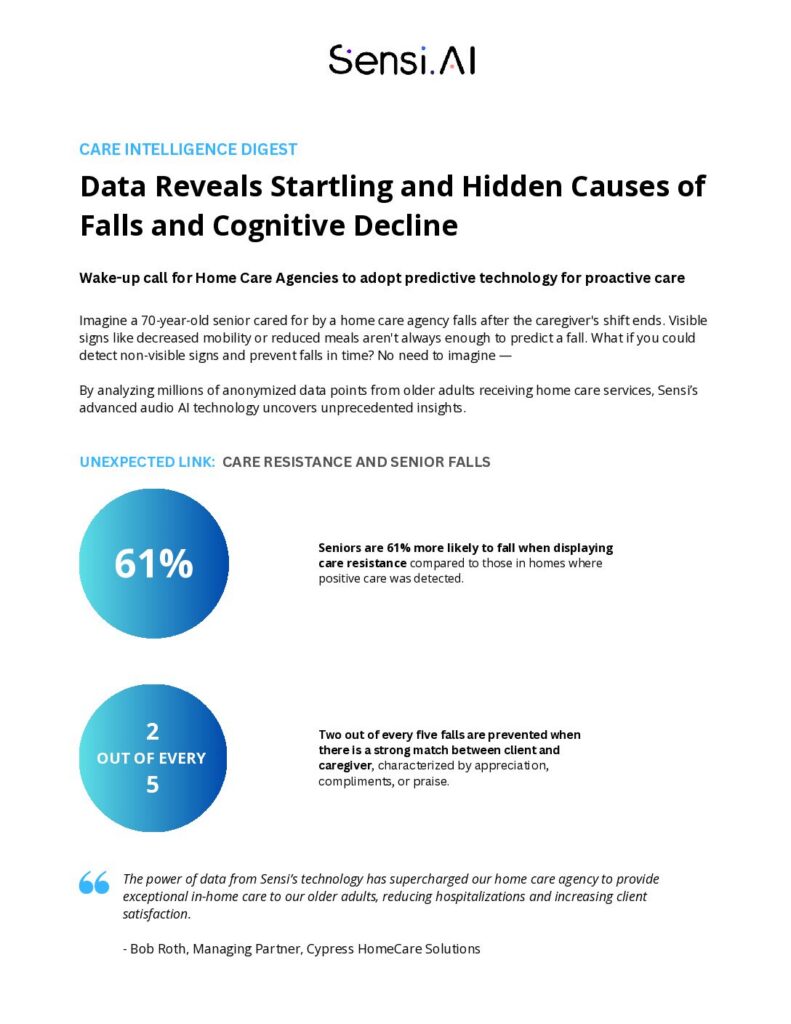
82% of Seniors With Cognitive Decline Showed Wellness Improvement When They Had Consistent, Positive Caregiver Interaction
AI is helping care providers see what helps seniors improve
Cognitive decline starts with small things, like a missed word or a repeated question, long before a diagnosis.
Physical and emotional changes tend to follow. Sensi detects all three together, so it’s clear whether someone is getting better or worse.
13 signals that show up alongside cognitive decline
55% of assessed seniors show signs of cognitive decline. Share of those who also show each signal.
Most frequent
-
95%Physical issue
-
93%Difficulty with daily activities
-
92%Pain
Also common
Source: Sensi Platform, 2026. 5,086 assessed seniors.
The Caregiver Relationship Is One of the Strongest Signals of Improvement.
Sensi carries a senior’s story from the first call through every visit, so care providers can focus on connection and care.
with consistent, positive caregiver interaction
without consistent, positive caregiver interaction
Wellness improvement means a specific, previously identified issue measurably got better.
Support that doesn’t clock out
Overnight, caregivers reach out about falls, hallucinations, wounds, and other issues that they aren’t sure how to handle. The Sensi agent helps care teams respond and gives an unsure caregiver someone to turn to in the middle of the night.
of clinical messages sent by caregivers led to an appropriate escalation or response.
Care intelligence connects the whole picture, from the first call to the 4am message, so the relationship at the center of care gets the attention it deserves.